
On this page
- Information Connected with a WinMatch Account
- Privacy Policy | Winmatch
- Information We Collect
- Registration Data and Account Access
- Identity Verification and KYC Documents
- Why WinMatch Uses Verification Information
- How We Use Your Information
- Personal Data and WinMatch Payments
- Deposits and Privacy
- Withdrawals and Personal Information
- Betting History and Account Activity
- Casino Activity and Privacy
- Sports Betting and User Data
- WinMatch Mobile App and Privacy
- How WinMatch States It Protects Personal Information
- Data Security
- Protecting Your WinMatch Login
- Personal Data Sent to Customer Support
- Bonuses and Privacy
- Data Accuracy
- Third-Party Payment Services
- Cookies and Tracking Technologies
- Data Retention
- Sharing of Personal Information
- Sharing Your Information
- User Rights and Requests About Personal Data
- Privacy and Account Verification Are Connected
- Keeping Personal Information Secure
- Changes to Privacy Information
- Changes to This Privacy Policy
- Contacting WinMatch About Privacy or Account Information
- Final Notes on WinMatch Privacy and Data Security
Information Connected with a WinMatch Account
Different stages of account use leave different records. Registration links a username with contact information. Financial activity adds amounts, dates and references. Verification may introduce photographs of documents. A support conversation can add anything the customer chooses to attach, including information the original account process never requested.
When deciding where to direct a question, identify the record first. A bank may hold a transfer reference, the account operator may hold a payout decision and an email provider may hold a delivery message. The fact that all three refer to one incident does not mean the same organisation controls all three records.
| Where the record arises | Types of information involved |
|---|---|
| Setting up a login | The registration email, chosen username and secret password |
| Using an account | Profile fields, displayed funds and past betting entries |
| Completing an identity review | The identity evidence or supporting file requested through verification |
| Moving money | Records associated with account funding and cash-out requests |
| Participating in games or markets | Casino rounds, exchange positions and sportsbook activity |
| Opening a support case | The explanation and evidence a customer supplies with the enquiry |
Privacy Policy | Winmatch
The earlier privacy notice grouped information by collection, use, sharing, security and revisions. These categories are helpful when deciding whether a request concerns the publisher, the account operator or a payment provider.
Information We Collect
The secondary WinMatch notice grouped information by how it arose. A customer supplied contact or payment details during registration and transactions. Technical information could arise while the service was being used, including the IP address, the kind of device and patterns of browsing. One category describes information intentionally entered in a form; the other can arise simply from visiting pages.
This difference matters when looking for a particular record. A profile screen may show contact fields without displaying technical logs. Asking only for “the information on my profile” may therefore describe a narrower request than intended.
Registration Data and Account Access
WinMatch’s registration material named an email address, username and password and described confirmation through email. Customers were also directed to review account terms and the privacy notice. A username can appear in support correspondence or account history; a password is a secret credential and should never be included in those records.
If an account holder changes email address, two issues arise. The old inbox may still contain historic messages, while the account’s active contact field may continue directing recovery links there. Updating the contact record through the account process is different from forwarding occasional messages to a new mailbox.
Review what a screenshot reveals
Before sending a screenshot through an appropriate private channel, check each part of the image.
Identity Verification and KYC Documents
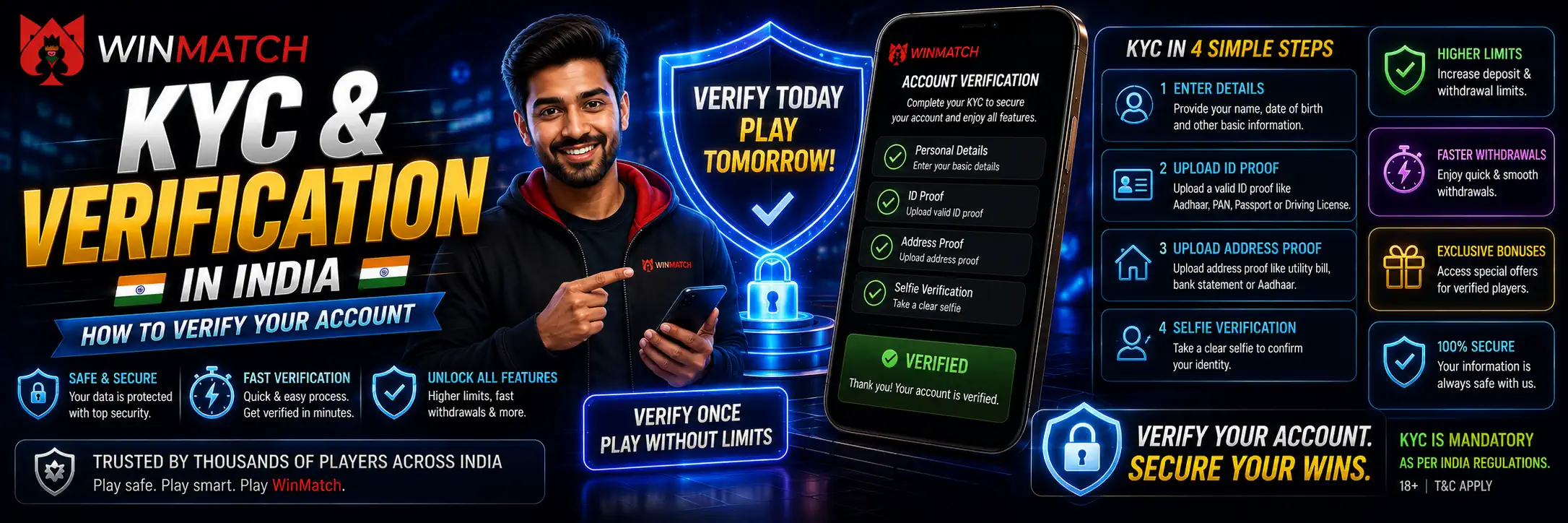
The identity path described by WinMatch ran through Account Settings and Verify Account. A passport, driving licence or utility bill could be requested, depending on the specific check. Passport details may identify the holder, while a utility bill may also reveal a household address and customer reference.
That difference affects how a person should handle the file. Read which evidence the operator is requesting and use its designated route. A support message about a disabled upload button can describe the problem without attaching the underlying document. A screenshot of the error may need cropping if it displays a document preview.
Why WinMatch Uses Verification Information
WinMatch associated documentary checks with financial security and licensing requirements. In account terms, the check connects the identity being claimed to evidence supplied by the holder. Email control, identity confirmation and ownership of a payment destination can answer related but distinct questions.
A cash-out support ticket might legitimately mention that identity review is pending. The ticket does not automatically require another copy of the customer’s passport. Ask which part of the process needs attention and use the specific request already attached to the account before sending a sensitive file elsewhere.
How We Use Your Information
In its shorter notice, the operator associated account information with payments, identity checking and account administration. It also linked technical information with personalising the service, recommending games and issuing promotional notices. These are separate purposes with different practical effects for a customer.
If the concern is unwanted marketing, specify whether the message appeared by email, on the device or within the account. If it is a recommendation within a lobby, identify that feature. A request framed around the actual use gives the operator a better chance of explaining relevant settings or choices.
Personal Data and WinMatch Payments
The payment pages referred to UPI, GPay, PhonePe, Amazon Pay, Visa/Mastercard and bank transfer. Depending on the route, documentation could contain a payer or recipient name, masked account information, a transfer identifier, dates and the amount in INR. A receipt can therefore reveal personal information even when it shows no password.
A support case about a single ₹1,000 debit should identify that transaction. It need not reveal a month of salary credits, household expenses or unrelated recipients from the same statement. Where a statement is formally required, verify the purpose and the permitted submission channel before sending it.
Deposits and Privacy
A deposit connects two histories. The payment provider records the customer-side debit, while the operator records the corresponding account credit. Either record may carry a reference the other party can use for tracing. The record also reveals the amount and time at which the customer used the service.
If you need to demonstrate an unmatched debit, retain the original receipt privately. A copy sent for support can show the relevant transaction while hiding other account activity. Keep security codes and one-time passwords outside every enquiry: they authorise access or spending and do not establish which previous transfer was missing.
Withdrawals and Personal Information
Cash-out records may identify both the player account and the receiving destination. A request that the platform marked as authorised can still differ from money finally posted by a bank. Those two dates and statuses may become part of a dispute file alongside the payout amount.
Use an accurate description when corresponding with support. “Requested on Tuesday and marked processed on Wednesday” identifies two events without asserting that a bank received anything. If the operator asks for additional identity evidence, keep it in the proper verification process instead of adding it to every message about bank timing.
Betting History and Account Activity
WinMatch described balance, profile and betting history as available to logged-in account holders. A bet slip can identify a specific match, selection, stake, accepted price and settlement result. A sequence of slips can show spending patterns and times of activity even where the customer’s real name is absent.
That makes screenshots of an apparently routine result more sensitive than they first look. Before sharing one, inspect the top of the screen for the username and balance, and the bottom for other open events. A slip identifier quoted privately to authorised support is often more useful than a full account screenshot.
Information can remain identifying after a name is removed. A slip posted publicly with a precise timestamp, an unusual stake and a niche market might still be recognisable to the person who handled the original support case. When an anonymised illustration will do, recreate it with clearly fictional amounts and dates. For a real complaint, send the unaltered identifiers privately to the party entitled to investigate them. The two uses have quite different evidence requirements.
Casino Activity and Privacy
The operator’s catalogue covered slots, live casino, poker, Teen Patti, Andar Bahar, TV games and crash titles. Activity linked to an account can include a game title, session or round reference and the amount or outcome recorded. A provider may need one of these values to trace a specific disputed result.
When describing a round, state which game was involved and when it happened. A full transaction export may reveal many unrelated sessions. If a screenshot includes other players’ chat names or a document preview in another browser tab, crop the relevant area before sharing it with the intended recipient.
Sports Betting and User Data
Cricket, IPL, football, tennis and other sports generate account records when a customer places a bet. The event name alone is public information, but alongside a specific account, exact stake and timestamp it can reveal something about the holder’s activity. Exchange positions and conventional fixed-odds slips may also have different references.
For an unresolved result, identify the correct slip rather than giving a complete personal betting history. If an operator asks for more, clarify whether it needs the exact market, settlement message or a record of funds. This keeps an event complaint distinct from an account-access or payments issue.
WinMatch Mobile App and Privacy
WinMatch’s Android and iOS material described account access across mobile products and cashier functions. A handset can also store downloaded receipts, document photographs, login sessions and notifications. Some of these remain on the device even after the customer has closed the page displaying the account.
Review the phone’s own notification and lock-screen settings, particularly on a shared device. A balance or recovery code visible in a message preview can reveal account information without anybody opening the application. Keep a private copy of essential evidence, then remove unnecessary copies from shared folders where appropriate.
How WinMatch States It Protects Personal Information
The operator referred to SSL encryption and additional safeguards, and described its payment systems as verified. Its shorter privacy notice also referred to security updates and monitoring. These statements describe the controls the operator said it used. They do not disclose the design of every system or identify how each uploaded document is stored.
For a customer, the destination remains important even when the connection is encrypted. Verify the identity of the contacting organisation independently and use the channel already associated with the account. A valid encrypted connection to an unrelated party would still deliver the document to the wrong recipient.
Data Security
WinMatch’s notice referred to encryption, monitoring and updates as parts of its security approach. The notice itself did not demonstrate that any specific account action was authorised by the customer. If a message requests credentials or an unexpected payment approval, investigate the request through the established account or financial provider.
Keep evidence of a suspicious message without forwarding its links or sharing its codes. A date, sender, subject and cropped image can be sufficient for an initial report. Preserve the original privately in case the institution investigating the incident requests further details through a secure process.
Protecting Your WinMatch Login
Use a password unique to the account and protect the email inbox used for recovery. Reusing the same password for a wallet, a betting account and an inbox connects separate services through one piece of information. A password reset for one account can then expose another if the inbox is also compromised.
If an unfamiliar recovery notification arrives, go directly to the account or email provider through a trusted route and inspect the relevant security settings. Avoid replying with a code. A legitimate support conversation about the notice can identify the time and message subject without revealing the code or password inside.
Personal Data Sent to Customer Support
Registration, payment queries, technical faults and game disputes leave different support records. A useful first message specifies the issue, date, relevant identifier and the outcome the customer wants investigated. Information attached to a ticket may persist with that ticket after the underlying problem has been resolved.
For example, a withdrawal enquiry may require a payout reference, amount and status. It generally has no need for an image showing the customer’s full card number or passwords stored in another app. If an additional check is requested, confirm its purpose and follow the appropriate secure process.
Bonuses and Privacy
The older brand pages described a welcome casino match, a Free Exchange Bet, a referral reward and a birthday offer. A promotion can create an account-level record of activation, eligibility and credit. A referral can also connect activity on more than one account. The existence of an offer does not establish every piece of information the operator collected about it.
If a promotional message is the issue, record its delivery channel, sender, date and offer name. If credit allocation is the issue, look for the activation entry and amount. Avoid sending personal details belonging to a referred person simply to demonstrate your own enquiry.
The 100% casino match and the birthday reward needed different account information. A first-deposit timestamp could determine the former, while a birth date could determine the latter. A referral identifier linked two profiles for a third purpose. A request about a referral does not justify exposing either person's complete transaction history.
Data Accuracy
An address change, renewed document, spelling correction or lost email account can leave different records describing the same person differently. Corrections are easier to assess when a request identifies the inaccurate field and the account process in which it appears. A payment reference and a profile address, for instance, may belong to different record owners.
Accurate information also limits unnecessary disclosure. If only a contact email needs updating, begin by asking about that field. Do not send a passport, a utility bill and a bank statement together before the operator has explained which evidence its process requires.
Third-Party Payment Services
A payment app, card issuer or bank maintains its own transaction information. WinMatch’s material named several payment options but did not provide an exhaustive public list of every company involved in every route. One transfer can therefore produce records held under more than one organisation’s notice.
If the concern is an unrecognised card charge, the issuer can identify the statement entry. If it concerns how an account uses a withdrawal destination, the operator holds the relevant account context. Deleting or correcting information with one party does not automatically change the independent books and records of the other.
Data Retention
The earlier public descriptions did not publish one retention period covering all categories. Registration records, verification evidence, transaction records, game histories and correspondence serve different functions and may have different retention conditions. A closed account or a button disappearing from the interface does not establish when all copies of a record were deleted.
Phrase a retention question narrowly: identify the kind of record, the approximate date and whether the account is open or closed. Ask which retention rule applies and whether the record can be erased or restricted. A useful answer should concern the named category rather than promise one date for everything.
Use dates to define the record you mean. A customer who last logged in during March may have submitted an identity file in April and opened a payout ticket in June. “My March account” could refer to any of these records. Asking separately how long the April document and the June ticket are kept makes it possible to compare the answer with the actual history. Removing a locally downloaded file changes only the copy on the customer’s device.
Sharing of Personal Information
The shorter WinMatch notice said it did not sell or rent personal information and described limited sharing with payment processing and fraud-prevention partners. These were statements made by the operator in that notice. It did not name every recipient, onward transfer, location or contract relevant to an individual account.
“Sharing” can refer to different events. A processor receiving information to trace a payment differs from a promotional contact receiving a marketing preference. Ask about the category, purpose and recipient of the information involved in the specific incident. This gives the operator a concrete disclosure to explain.
A helpful follow-up asks whether information was disclosed once for a particular transaction or is used repeatedly for a continuing service. A bank tracing request for a dated withdrawal has a clear reference and event. A marketing preference may persist across future messages. Specify which case applies before asking about the organisations involved. The wording of a general privacy notice rarely establishes the recipients of a particular debit or the reason a named individual received a message.
Sharing Your Information
The shorter notice named payment processing and fraud prevention as examples of external functions and said personal information was not offered for sale or rental. Its description was at the level of categories. It did not supply a complete directory of recipients for every type of customer record.
For a particular case, ask which class of recipient handled which class of information. A bank may need transaction details to locate a payment, while another service may be concerned with account integrity. A customer does not need to send additional identification merely to ask what information was previously shared.
User Rights and Requests About Personal Data
A focused request identifies whether the customer wants access to information, correction of an error, an explanation of a use, or deletion where applicable. Include enough information to identify the account and record without putting secret credentials in the request. The source notices did not set a universal deadline or a single procedure covering every request.
For example, ask “Which contact address is associated with my account, and how can I correct it?” rather than sending an entire identity file to a public address. Retain the acknowledgement, case number and reply. If an operator requests identity checks before disclosure, use its designated secure route.
For an access enquiry about a disputed correction, give a tight date range and identify the field involved. For example, ask when the registered email changed during a named week and how the request was authenticated. Sending two unmasked addresses to a public inbox creates an additional disclosure before the recipient has established account ownership. Open the enquiry through the authorised route and let the holder explain the verification it reasonably needs for that request.
Privacy and Account Verification Are Connected
Verification can protect account data by limiting disclosure to the person entitled to see it. It also requires careful handling because the evidence itself may contain highly sensitive fields. Those interests can be reconciled by identifying the checked fact and restricting distribution of the evidence.
A request for the name of the account holder differs from a request about the source of a particular transfer. Ask which fact needs supporting. An authenticated account procedure gives the request a traceable purpose; distributing the same material across several informal conversations creates extra exposure without necessarily resolving the question.
Keeping Personal Information Secure
Three moments deserve particular attention: entering credentials, authorising a payment and sharing evidence. At login, check the service being accessed. In the payment app, inspect the recipient, amount and direction. Before sharing a receipt or error screenshot, look for personal material outside the part that proves the incident.
One especially common mistake is forwarding a screen recording that starts with the account issue but ends with an inbox or a gallery containing identity documents. Trim the recording or capture a smaller still image. Send only through the established channel and keep a copy of what was actually submitted.
Changes to Privacy Information
The older notice said changes could follow updates to products, operations or regulations and described notifying users about significant revisions. A screenshot of an earlier notice establishes the wording on that occasion. It does not establish which edition a later account action displayed.
If the question concerns an old transaction, keep the version or date associated with it. For a new privacy request, refer to the current channel and notice for the service holding the record. In both cases, a dated acknowledgement helps distinguish what was requested from the operator’s eventual response.
Changes to This Privacy Policy
The shorter notice acknowledged that its wording could be revised and said significant changes would be communicated. A useful record of a change includes the notice date, the provision concerned and the notification received. A generic change announcement does not, by itself, reveal which part of the customer’s data use was affected.
When a revision concerns a concrete action such as submitting an identity document or using a payment provider, read the wording presented for that action. If it leaves an important question open, keep the dated text and ask the service responsible for that record.
Contacting WinMatch About Privacy or Account Information
A question about an existing operator account should identify the operator, the account reference and the particular personal-data issue. A question about a bank statement belongs with the institution maintaining that statement. This editorial site explains the account documentation and has no access to the operator’s identity files or account ledger.
Write the desired outcome plainly: a correction, an explanation, a copy where available or a review of a disputed disclosure. Retain the case number. If you send supporting material, use a channel authenticated independently from the message that initially requested it.
Final Notes on WinMatch Privacy and Data Security
The most useful privacy record is often a short timeline. Write down when an account was created, when a payment took place, when an identity request appeared and when a support case was opened. Add references beside events instead of collecting every sensitive file in a single message.
This separates the operator’s stated safeguards from what a customer can demonstrate about an individual case. It also gives each party a precise question to answer. A bank can discuss its transfer, a platform can discuss its account decision and a customer can limit disclosure to the evidence needed for that particular issue.
Current rules in India
India prohibits online money games and their promotion. The product screens and account terms shown here document earlier versions of WinMatch. Government of India · Online Gaming Rules, 2026
Published · Updated